Review Details

View all

World Tea Academy: Complete 16-Course ADVANCED SERIES Bundle

Whether you’re starting a tea business, aiming to enhance your expertise for a career in the hospitality industry, or simply passionate about tea, the CORE SERIES Bundle is your gateway to becoming a tea expert.

Original price was: $4,560.00 USD.Current price is: $3,645.00 USD.

-
+

What you will learn

Overview

All the courses included ADVANCED SERIES Complete Bundle: In the World Tea Academy's ADVANCED SERIES Bundle, you'll deepen your tea expertise through sixteen comprehensive courses, exploring tea’s history, brewing mastery, global cultivation, sensory evaluation, and quality assessment.
ADV.01 Advanced CuppingThis class focuses on the tea professional’s most valuable skill – using the professional tea cupping protocol as a tool to evaluate teas. The course material takes an in-depth look at terroir, each stage of tea processing, and finally the grades of teas, explaining how each factor creates and influences the taste and aroma of tea in the cup.

What you will learn:

  • Define terroir and name the different aspects of terroir.
  • Describe how each stage of processing influences tea’s flavor and aroma.
  • Describe how defects can develop during processing and how they can affect the tea.
  • Describe the relationship of tea grades to flavor profiles.
  • Discern the difference between the terroir of tea from different countries.
  • Identify the difference that various stages of processing make in the cup.
ADV.02 Understanding the Organoleptic ExperienceThis class is an in-depth exploration of both how we experience tea and what we experience. The ‘how’ begins with the anatomy of our organoleptic system, the tools we use to perceive tea on every level. Then we look at how the chemistry of tea ‘colors’ our experience, as well as examining some general principles concerning flavor.

What you will learn:

  • Describe the anatomy and function of the human organoleptic system.
  • Understand the relationship between tea’s chemical make-up and our experience of tea.
  • Know how and why we can modulate a tea’s flavor, enhancing certain flavors and diminishing others.
  • Know why people tasting the same tea can have very different experiences.
  • Identify various compounds that are the flavors, mouthfeel, and colors of tea.
ADV.03 The Culture of Tea Around the WorldA cup of tea is much more than a pleasing beverage. It is the culmination of careful cultivation, backbreaking labor, artisanal craftsmanship, thoughtful preparation and centuries if not millennia of history. With each sip, we are not only being nourished by the fragrant liquor, we are imbued with the essence of the people and the cultures that have shaped the leaves.

What you will learn:

  • Recount the history of tea from a cultural perspective.
  • Identify the influences of world cultures on tea production, preparation, and service.
  • Use historical and cultural traditions to enhance marketing and sales efforts.
  • Share your familiarity with traditional tea customs and ceremonies with others.
  • Care for yixing tea pots.
ADV.04 The Biochemistry of Tea ProcessingIn this advanced class, we examine each of the stages of processing from the point of view of the tea leaf and the chemical transformations that are taking place. Our goal is to identify the volatile and non-volatile chemical compounds that we experience in every type of tea we drink and understand how each step of the manufacturing process supports the development of those desirable compounds.

What you will learn:

  • Name the key chemical compounds involved in tea processing.
  • Name and describe the key chemical reactions involved in tea processing.
  • Identify how each stage supports the development of desirable compounds.
  • Identify how each stage helps inhibit the development of undesirable compounds.
  • Describe the nature and flavor contributions of the chemical compounds developed during tea processing.
  • Name the different groups of polyphenols in tea and identify their role in tea’s flavor.
ADV.05 Presentation and Advanced Brewing TechniquesGreat tea service does not build itself. Counter staffers are not intuitive brewers by accident, and customers are not knowledgeable or self-aware about options. A truly dynamic, mindful, and sustainable tea program, for any operation, takes work, investment, and patience.

What you will learn:

  • Evaluate considerations for developing an iced tea program.
  • Describe the differences between various brewing styles for iced tea and their application.
  • Identify concrete variables that separate an average tea program from an excellent tea program.
  • State why weighing tea versus scooping tea makes a difference in consistent service.
  • Describe suggested serving amounts for varying popular teas and tea wares.
ADV.06 The Tea LifestyleLong before Martha and Oprah forged links between the role of celebrity and lifestyle expert, the Greek philosophers Socrates and Plato pondered how humans should best live their lives. Following them, Aristotle proposed that the greatest aim of life was living well and flourishing.

What you will learn:

  • Explore the history of tea as a lifestyle element.
  • Understand the role of tea in social and cultural settings.
  • Learn about famous tea personalities and their influence.

ADV.07 Quality Systems for Product ManagementYou are launching a new tea product, “Wake the Dead Breakfast Blend” with hopes of getting distribution and having your product offered in retail stores throughout the US, and then the world! You have developed the blend, optimized the flavor, color, and aroma, and positive feedback is rolling in.

What you will learn:

  • What is required for regulatory approval to sell your product?
  • How can you ensure that your product continues to perform well as your volume grows and as your supply chain evolves?
  • What will be required by your customers as your product enters distribution centers and larger retailers?
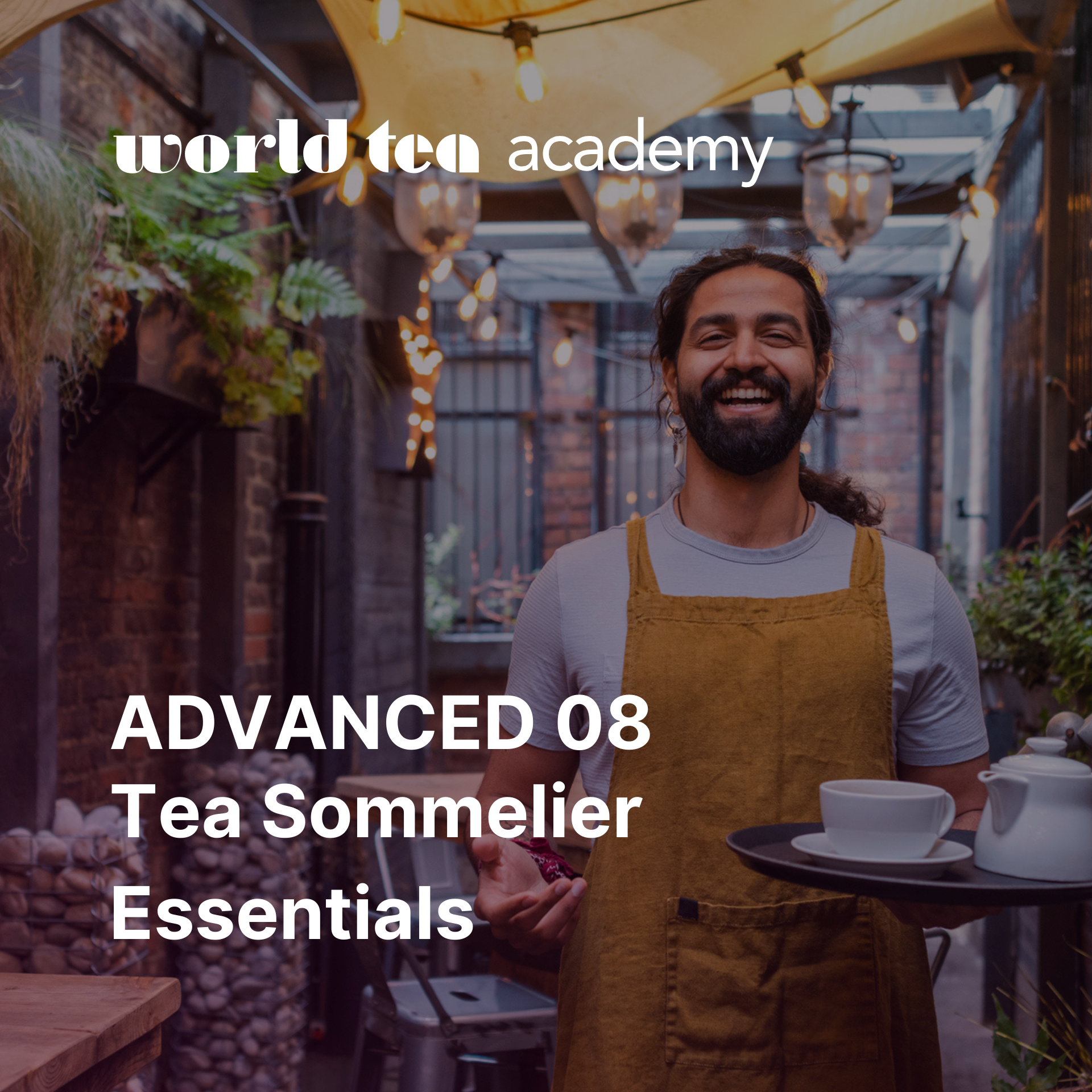
ADV.08 Tea Sommelier EssentialsOne of the newest and most coveted careers in the tea industry today is that of Tea Sommelier. Having borrowed the word ‘sommelier’ from the wine industry gives us a general idea of how that role might translate in the world of tea. But as a tea career, the role is so new it is still evolving and defining itself.

What you will learn:

  • Identify the roles and responsibilities of a Tea Sommelier.
  • Apply the basic principles of food and beverage pairing.
  • Create tea menus for any establishment or institution.
  • Procure and manage a tea inventory.
  • Identify the essential qualities and characteristics of a tea for presentation and education.
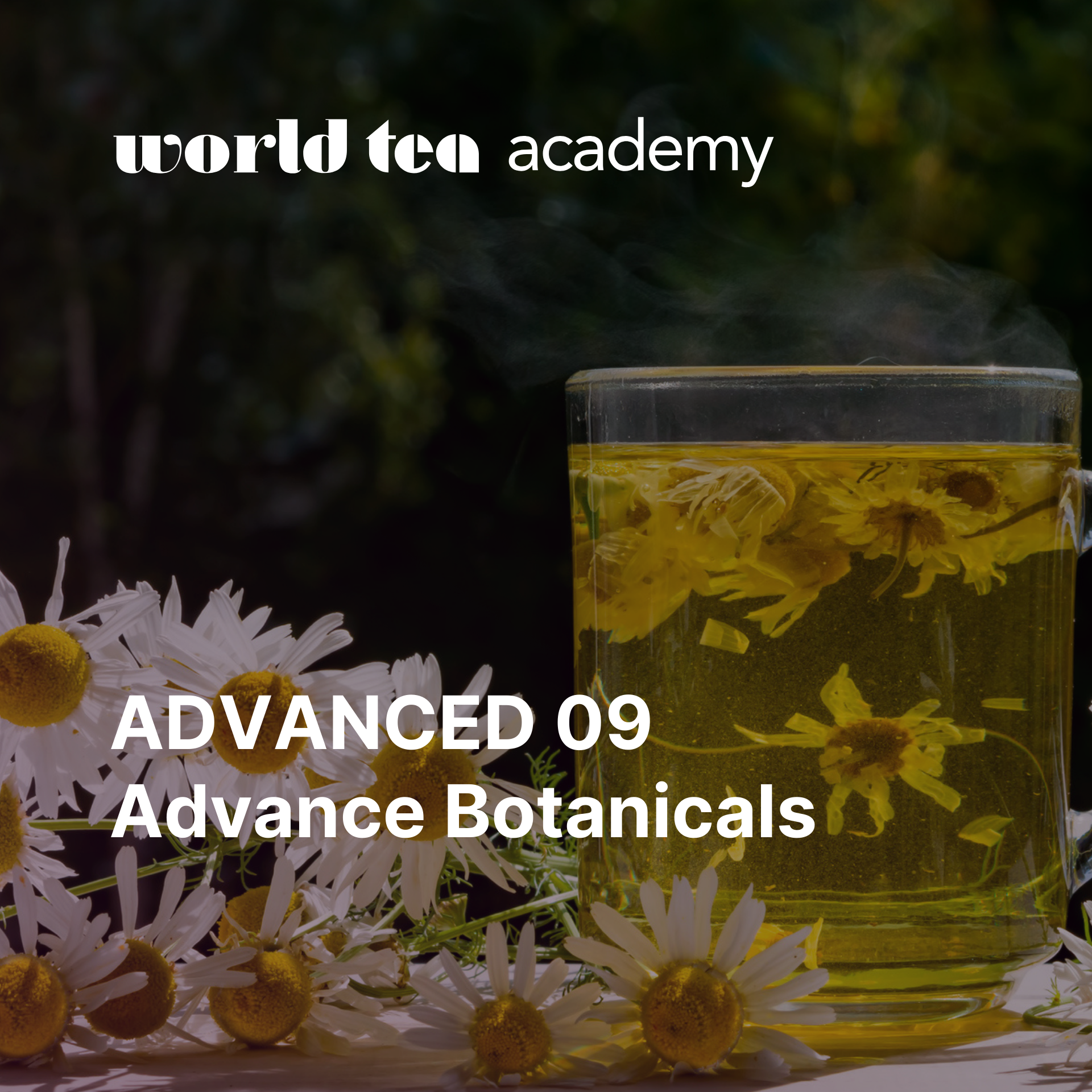
ADV.09 Advanced BotanicalsOn their own as single ingredients or artfully blended with other herbs and with Camellia sinensis leaves, botanicals – or herbs – bring a rich variety of flavors and benefits to tea products and are an important ingredient in the world of tea.

What you will learn:

  • Identify stages of processing in herbal products manufacture.
  • Assess the major factors in herb quality and how to test them.
  • Describe the basic strategy for creating herbal blends.
  • Name the top 14 herbal ‘tea’ ingredients.
  • Discuss the issues related to safety, regulation, and labeling of herbs.
ADV.10 Tea and HealthIn this class, we will learn about how tea consumption positively affects physical, mental, and even spiritual health. We will examine ancient and modern perspectives; first exploring tea’s healing benefits in the context of ancient Chinese culture and Chinese medicine and then summarizing how cutting-edge science demonstrates these effects.

What you will learn:

  • Name and define basic Chinese Medical Terms.
  • Describe tea’s historical role as a medicinal beverage in China, Japan, and Tibet.
  • Describe tea’s positive effects on heart disease, cancer, cognitive function, and longevity.
  • Describe tea’s history and relationship to spiritual well-being.
  • Describe the relationship between tea, protein, and Alzheimer’s.
  • Name one way that tea helps protect against one of the damaging effects of coffee.
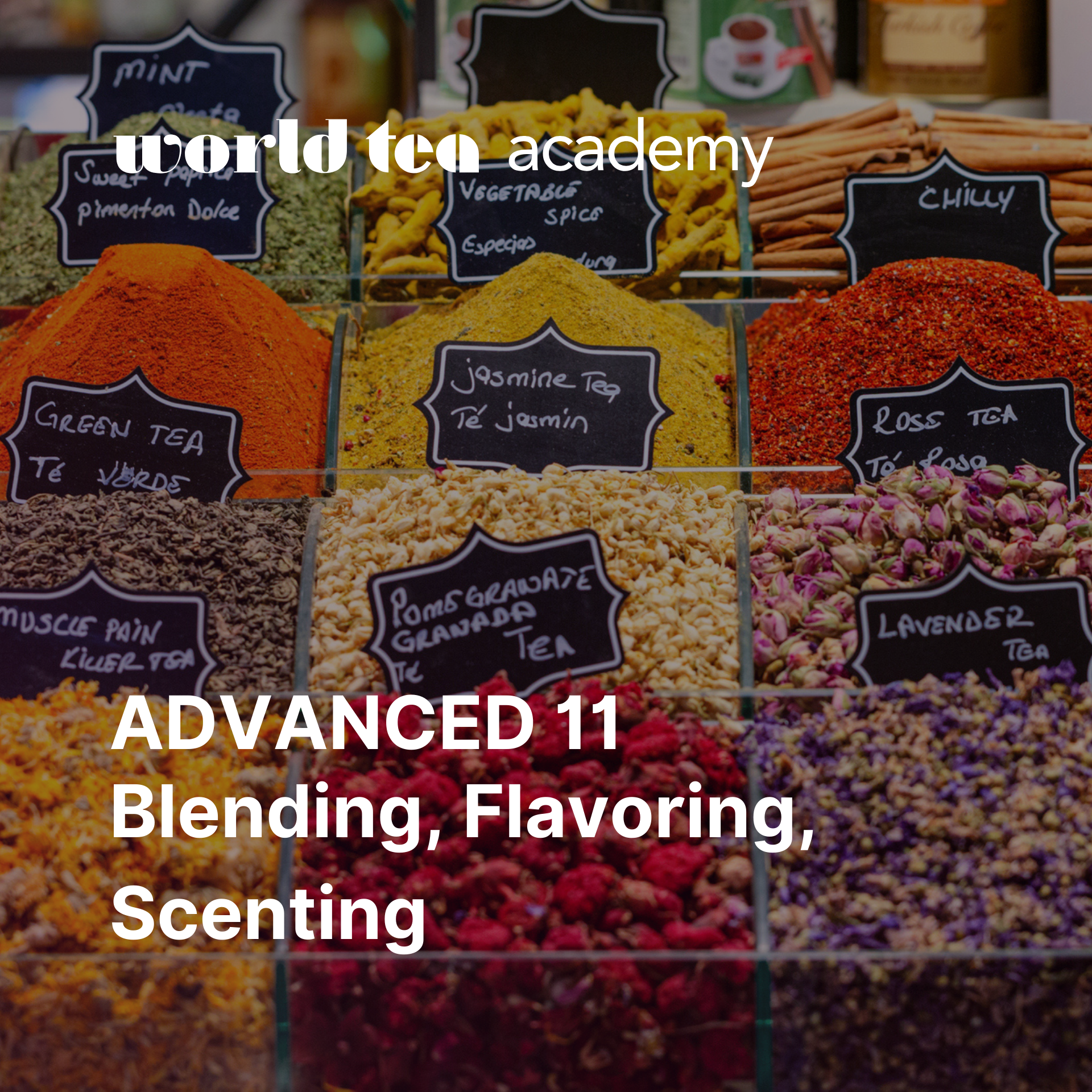
ADV.11 Blending, Flavoring, ScentingMany companies jump into the fun world of flavoring and blending teas themselves without really knowing the consequences of bringing these manufacturing processes in-house. The class material addresses important aspects of the operational concerns of applying these techniques within your company’s settings.

What you will learn:

  • Operational considerations for in-house manufacturing processes including: OSHA, EFSA, FDA regulations, and the FD&C Act.
  • Standard practices and paperwork chain for labeling of organic, kosher, and halal.
  • Science, safety, and legal aspects of flavoring materials.
  • Code of practice of the International Organization of the Flavor Industry (IOFI).
  • Guidelines of flavoring agents and labeling: Natural, WONF, Artificial, Natural and Artificial, Nature Identical, and Organic.
  • Wet Flavoring applications and documentation requirements.
ADV.12 Formulating Delicious BlendsIn this course, you will use your knowledge of your flavor system, coupled with an understanding of the chemistry of teas, herbs, spices, fruits, and flowers, to create delicious blends and explore how blends can fit into lifestyles and life experiences.

What you will learn:

  • Understand and explain the organoleptic considerations underlying blend creation.
  • Evaluate which combinations of teas, botanical infusions, herbs, spices, and fruits will be the most delicious, and which ones will be the least.
  • Use specific vocabulary to allow the consumer to anticipate the flavors they will experience when brewing and sipping different blends.
  • Use your knowledge to explore new possibilities for ingredients in blends.
ADV.13 Art of Flavoring, Blending, Scenting Tea Part 1The world of possibilities in blending teas is immense, but no matter how inspired and informed the new blend you created and fell in love with last week was, commercial success is not guaranteed.

What you will learn:

  • The essential steps for successful tea blending.
  • What to consider in the formulation and production of loose leaf, single serve, and RTD teas.
  • How to ensure that the key profile characteristics of your blend remain consistent from ideation to final product.
  • How to evaluate whether to do your own blending in-house or work in partnership with a flavoring company.
  • How to set up your own tea blender's workspace, what equipment is needed, etc.
ADV.14 Art of Flavoring, Blending, Scenting Tea Part 2ADV.14 is part 2 of the Art of Flavoring, Blending, and Scenting Tea. Week One explores the art of scenting and describes the 4 primary techniques. It also offers key points for success with scenting. Week Two is an in-depth look at the two types of flavorings – wet and dry and how to use them.

What you will learn:

  • The four primary techniques for scenting teas.
  • The different forms and applications of liquid and dry flavorings.
  • How to use soluble and insoluble dry flavorings in blended teas.
  • How to find sources for flavorings and flavoring consultants.
  • How to evaluate and analyze existing tea blends.
  • The history and evolution of classic and traditional tea blends.
ADV.15 The Aromas of Tea Part IThis class is a guide to the nature of flavors and aromas of teas and how to develop our ability to recognize and describe them. The class is highly advanced and emphasizes many assignments using your sense of smell and taste. No matter what your current level of ability is, the exercises are designed to further train the senses.

What you will learn:

  • Develop advanced sensory evaluation skills.
  • Recognize and describe complex tea aromas.
  • Understand the nature of flavors in tea.
ADV.16 The Aromas of Tea Part IIBuilding on Part I, this advanced course continues the exploration of tea aromas, focusing specifically on the impact of oxidation, firing, and fermentation processes on the sensory profile of tea.

What you will learn:

  • Understand the impact of oxidation on tea aroma.
  • Learn how firing and fermentation affect sensory profiles.
  • Master the description of processed tea aromas.
Description

All the courses included ADVANCED SERIES Complete Bundle:

In the World Tea Academy’s ADVANCED SERIES Bundle, you’ll deepen your tea expertise through sixteen comprehensive courses, exploring tea’s history, brewing mastery, global cultivation, sensory evaluation, and quality assessment.


ADV.01 Advanced Cupping

This class focuses on the tea professional’s most valuable skill – using the professional tea cupping protocol as a tool to evaluate teas. The course material takes an in-depth look at terroir, each stage of tea processing, and finally the grades of teas, explaining how each factor creates and influences the taste and aroma of tea in the cup.

What you will learn:

  • Define terroir and name the different aspects of terroir.
  • Describe how each stage of processing influences tea’s flavor and aroma.
  • Describe how defects can develop during processing and how they can affect the tea.
  • Describe the relationship of tea grades to flavor profiles.
  • Discern the difference between the terroir of tea from different countries.
  • Identify the difference that various stages of processing make in the cup.

ADV.02 Understanding the Organoleptic Experience

This class is an in-depth exploration of both how we experience tea and what we experience. The ‘how’ begins with the anatomy of our organoleptic system, the tools we use to perceive tea on every level. Then we look at how the chemistry of tea ‘colors’ our experience, as well as examining some general principles concerning flavor.

What you will learn:

  • Describe the anatomy and function of the human organoleptic system.
  • Understand the relationship between tea’s chemical make-up and our experience of tea.
  • Know how and why we can modulate a tea’s flavor, enhancing certain flavors and diminishing others.
  • Know why people tasting the same tea can have very different experiences.
  • Identify various compounds that are the flavors, mouthfeel, and colors of tea.

ADV.03 The Culture of Tea Around the World

A cup of tea is much more than a pleasing beverage. It is the culmination of careful cultivation, backbreaking labor, artisanal craftsmanship, thoughtful preparation and centuries if not millennia of history. With each sip, we are not only being nourished by the fragrant liquor, we are imbued with the essence of the people and the cultures that have shaped the leaves.

What you will learn:

  • Recount the history of tea from a cultural perspective.
  • Identify the influences of world cultures on tea production, preparation, and service.
  • Use historical and cultural traditions to enhance marketing and sales efforts.
  • Share your familiarity with traditional tea customs and ceremonies with others.
  • Care for yixing tea pots.

ADV.04 The Biochemistry of Tea Processing

In this advanced class, we examine each of the stages of processing from the point of view of the tea leaf and the chemical transformations that are taking place. Our goal is to identify the volatile and non-volatile chemical compounds that we experience in every type of tea we drink and understand how each step of the manufacturing process supports the development of those desirable compounds.

What you will learn:

  • Name the key chemical compounds involved in tea processing.
  • Name and describe the key chemical reactions involved in tea processing.
  • Identify how each stage supports the development of desirable compounds.
  • Identify how each stage helps inhibit the development of undesirable compounds.
  • Describe the nature and flavor contributions of the chemical compounds developed during tea processing.
  • Name the different groups of polyphenols in tea and identify their role in tea’s flavor.

ADV.05 Presentation and Advanced Brewing Techniques

Great tea service does not build itself. Counter staffers are not intuitive brewers by accident, and customers are not knowledgeable or self-aware about options. A truly dynamic, mindful, and sustainable tea program, for any operation, takes work, investment, and patience.

What you will learn:

  • Evaluate considerations for developing an iced tea program.
  • Describe the differences between various brewing styles for iced tea and their application.
  • Identify concrete variables that separate an average tea program from an excellent tea program.
  • State why weighing tea versus scooping tea makes a difference in consistent service.
  • Describe suggested serving amounts for varying popular teas and tea wares.

ADV.06 The Tea Lifestyle

Long before Martha and Oprah forged links between the role of celebrity and lifestyle expert, the Greek philosophers Socrates and Plato pondered how humans should best live their lives. Following them, Aristotle proposed that the greatest aim of life was living well and flourishing.

What you will learn:

  • Explore the history of tea as a lifestyle element.
  • Understand the role of tea in social and cultural settings.
  • Learn about famous tea personalities and their influence.

ADV.07 Quality Systems for Product Management

You are launching a new tea product, “Wake the Dead Breakfast Blend” with hopes of getting distribution and having your product offered in retail stores throughout the US, and then the world! You have developed the blend, optimized the flavor, color, and aroma, and positive feedback is rolling in.

What you will learn:

  • What is required for regulatory approval to sell your product?
  • How can you ensure that your product continues to perform well as your volume grows and as your supply chain evolves?
  • What will be required by your customers as your product enters distribution centers and larger retailers?

ADV.08 Tea Sommelier Essentials

One of the newest and most coveted careers in the tea industry today is that of Tea Sommelier. Having borrowed the word ‘sommelier’ from the wine industry gives us a general idea of how that role might translate in the world of tea. But as a tea career, the role is so new it is still evolving and defining itself.

What you will learn:

  • Identify the roles and responsibilities of a Tea Sommelier.
  • Apply the basic principles of food and beverage pairing.
  • Create tea menus for any establishment or institution.
  • Procure and manage a tea inventory.
  • Identify the essential qualities and characteristics of a tea for presentation and education.

ADV.09 Advanced Botanicals

On their own as single ingredients or artfully blended with other herbs and with Camellia sinensis leaves, botanicals – or herbs – bring a rich variety of flavors and benefits to tea products and are an important ingredient in the world of tea.

What you will learn:

  • Identify stages of processing in herbal products manufacture.
  • Assess the major factors in herb quality and how to test them.
  • Describe the basic strategy for creating herbal blends.
  • Name the top 14 herbal ‘tea’ ingredients.
  • Discuss the issues related to safety, regulation, and labeling of herbs.

ADV.10 Tea and Health

In this class, we will learn about how tea consumption positively affects physical, mental, and even spiritual health. We will examine ancient and modern perspectives; first exploring tea’s healing benefits in the context of ancient Chinese culture and Chinese medicine and then summarizing how cutting-edge science demonstrates these effects.

What you will learn:

  • Name and define basic Chinese Medical Terms.
  • Describe tea’s historical role as a medicinal beverage in China, Japan, and Tibet.
  • Describe tea’s positive effects on heart disease, cancer, cognitive function, and longevity.
  • Describe tea’s history and relationship to spiritual well-being.
  • Describe the relationship between tea, protein, and Alzheimer’s.
  • Name one way that tea helps protect against one of the damaging effects of coffee.

ADV.11 Blending, Flavoring, Scenting

Many companies jump into the fun world of flavoring and blending teas themselves without really knowing the consequences of bringing these manufacturing processes in-house. The class material addresses important aspects of the operational concerns of applying these techniques within your company’s settings.

What you will learn:

  • Operational considerations for in-house manufacturing processes including: OSHA, EFSA, FDA regulations, and the FD&C Act.
  • Standard practices and paperwork chain for labeling of organic, kosher, and halal.
  • Science, safety, and legal aspects of flavoring materials.
  • Code of practice of the International Organization of the Flavor Industry (IOFI).
  • Guidelines of flavoring agents and labeling: Natural, WONF, Artificial, Natural and Artificial, Nature Identical, and Organic.
  • Wet Flavoring applications and documentation requirements.

ADV.12 Formulating Delicious Blends

In this course, you will use your knowledge of your flavor system, coupled with an understanding of the chemistry of teas, herbs, spices, fruits, and flowers, to create delicious blends and explore how blends can fit into lifestyles and life experiences.

What you will learn:

  • Understand and explain the organoleptic considerations underlying blend creation.
  • Evaluate which combinations of teas, botanical infusions, herbs, spices, and fruits will be the most delicious, and which ones will be the least.
  • Use specific vocabulary to allow the consumer to anticipate the flavors they will experience when brewing and sipping different blends.
  • Use your knowledge to explore new possibilities for ingredients in blends.

ADV.13 Art of Flavoring, Blending, Scenting Tea Part 1

The world of possibilities in blending teas is immense, but no matter how inspired and informed the new blend you created and fell in love with last week was, commercial success is not guaranteed.

What you will learn:

  • The essential steps for successful tea blending.
  • What to consider in the formulation and production of loose leaf, single serve, and RTD teas.
  • How to ensure that the key profile characteristics of your blend remain consistent from ideation to final product.
  • How to evaluate whether to do your own blending in-house or work in partnership with a flavoring company.
  • How to set up your own tea blender’s workspace, what equipment is needed, etc.

ADV.14 Art of Flavoring, Blending, Scenting Tea Part 2

ADV.14 is part 2 of the Art of Flavoring, Blending, and Scenting Tea. Week One explores the art of scenting and describes the 4 primary techniques. It also offers key points for success with scenting. Week Two is an in-depth look at the two types of flavorings – wet and dry and how to use them.

What you will learn:

  • The four primary techniques for scenting teas.
  • The different forms and applications of liquid and dry flavorings.
  • How to use soluble and insoluble dry flavorings in blended teas.
  • How to find sources for flavorings and flavoring consultants.
  • How to evaluate and analyze existing tea blends.
  • The history and evolution of classic and traditional tea blends.

ADV.15 The Aromas of Tea Part I

This class is a guide to the nature of flavors and aromas of teas and how to develop our ability to recognize and describe them. The class is highly advanced and emphasizes many assignments using your sense of smell and taste. No matter what your current level of ability is, the exercises are designed to further train the senses.

What you will learn:

  • Develop advanced sensory evaluation skills.
  • Recognize and describe complex tea aromas.
  • Understand the nature of flavors in tea.

ADV.16 The Aromas of Tea Part II

Building on Part I, this advanced course continues the exploration of tea aromas, focusing specifically on the impact of oxidation, firing, and fermentation processes on the sensory profile of tea.

What you will learn:

  • Understand the impact of oxidation on tea aroma.
  • Learn how firing and fermentation affect sensory profiles.
  • Master the description of processed tea aromas.

Original price was: $4,560.00 USD.Current price is: $3,645.00 USD.

-
+
0